If you think your dog ate something toxic, ring your vet, or Animal PoisonLine, straight away and follow their advice. Do not try to make your dog sick yourself.
Most countryside walks are safe for dogs, but it's worth knowing that a few toxic plants and substances can turn up around local paths, lanes, fields, or riverbanks.
Some toxic hazards to look out for
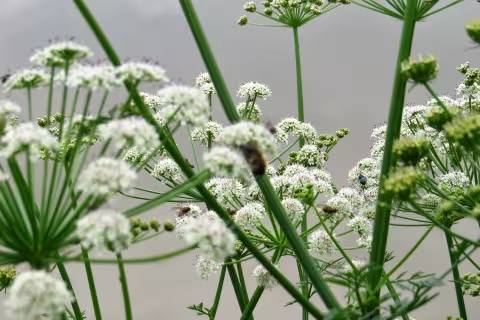
Water hemlock (or hemlock water dropwort) is an extremely toxic plant that grows along rivers, streams, and other damp locations across the UK (including Wiltshire and areas near Bath). It can be lethal to dogs and other animals (including humans), killing within minutes of ingestion. When walking a dog, it's important to be aware of this danger and to keep well away from this wild-growing plant.
It's also important to keep dogs away from any yew clippings. Yew is likewise highly toxic and worth learning to recognise, especially its berries.
Blue-green algae on still ponds and lakes or stagnant waterways is one of the most dangerous hazards on a countryside walk. If ingested, it can be fatal within hours, so never allow a dog to swim in or drink water with a scummy, paint-like sheen.
If you walk near farms and gardens, it's also important to keep a dog away from slug pellets or rodent poisons that are sometimes left out in these areas.
Bluebell and daffodil bulbs are best kept away from dogs. Conkers and acorns usually cause nothing worse than a mild tummy upset when ingested in small quantities, though eating a lot can create a choking and blockage risk.
Check with an expert if you suspect poisoning
A vet needs accurate information to decide the right treatment, and the first move is always to call for advice, not to act. The right treatments depends on what was eaten and when. Some substances cause more damage coming back up than staying down, so do not automatically try to induce vomiting if your dog has swallowed something toxic.
Signs to watch for
Step by step
Move away from the source
Get your dog away from the plant, algae, or bait so they cannot eat more while you work out what happened.
Try to identify what it was
A photo of the plant, packet, or algae on your phone is useful information for the vet.
Ring your vet or Animal PoisonLine straight away
Don't wait for symptoms to appear. Timing matters more than most people expect.
Do not make your dog sick
Only do this if a vet specifically tells you to and explains how. It is often unsafe or pointless depending on what was eaten.
Get moving if advised
Bring any packaging, a plant sample, or a clear description with you.
Blue-green algae is worth knowing by sight: a scummy, paint-like sheen on still water. When in doubt, keep dogs out of water you would not want to swim in yourself.